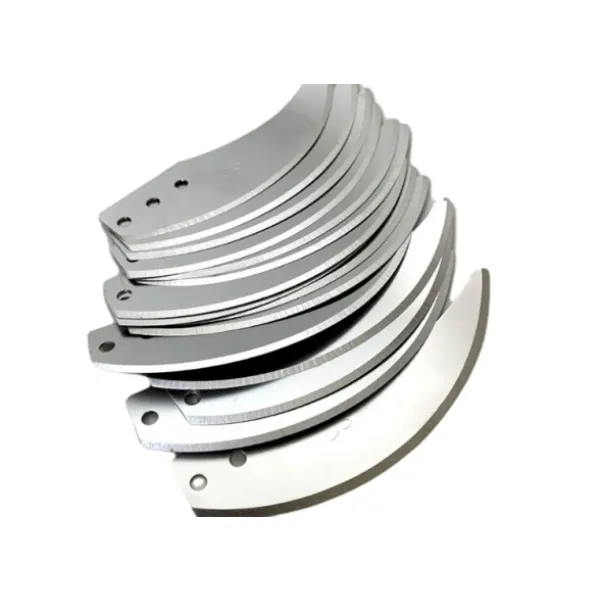
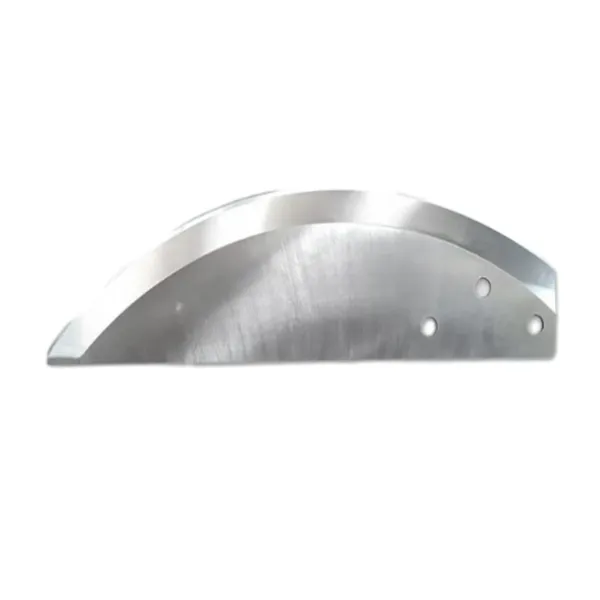
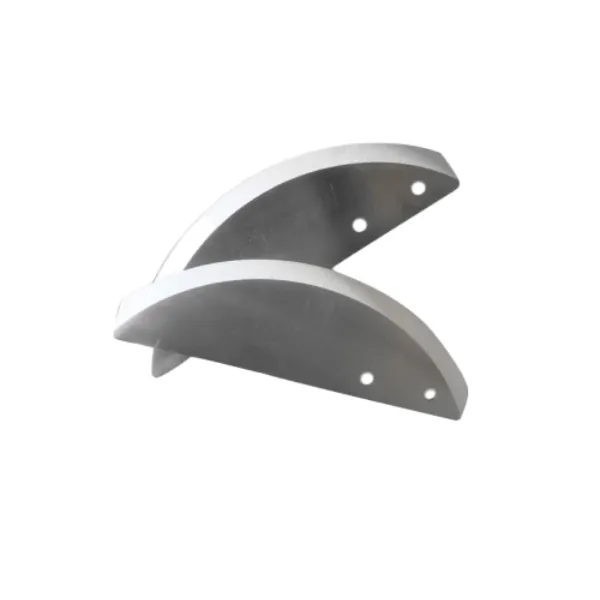
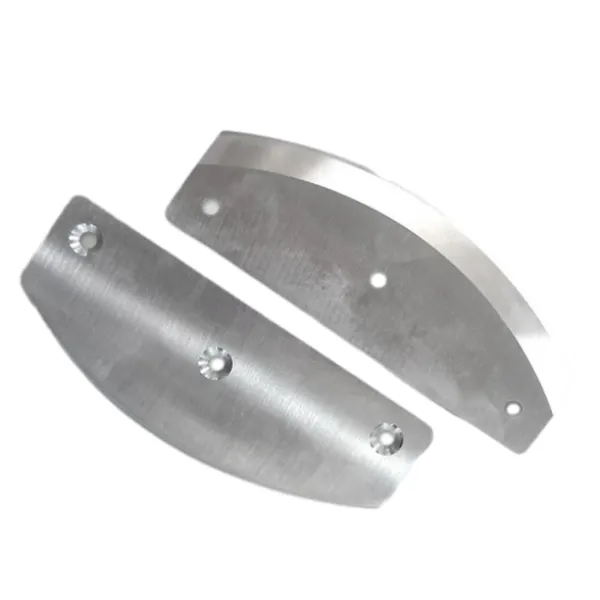
The Core Application Of Bone Cutting Knives In The Food Industry
1.Bone and meat cutting: Used for processing bone containing ingredients such as chicken, duck, fish, and small pork ribs. With a thick blade design (cutting angle of 25 °), efficient bone and meat separation is achieved, and a single operation can process 5-10kg of raw materials.
2.Industrial assembly line adaptation: The automatic bone cutting knife is integrated into the meat processing line, achieving 20-30 cuts per minute, replacing manual bone cutting and increasing efficiency by 300%. For hard ingredients such as leg bones, a heavy-duty bone cutting knife should be used, with a medium thick blade and a thin front design to enhance impact resistance.
3.Processing of pre made ingredients: In the production of sauce skeletons, braised dishes, and other dishes, the bone cutting knife can accurately control the size of the bone pieces (such as 3-5cm segments) to ensure even cooking and flavor. By quickly slicing frozen meat (stored at -18 ℃), the loss of thawing time is reduced and the freshness of the ingredients is maintained.
4.Convenient household handling: The household bone cutting knife is made of 30Cr13 stainless steel material, which balances sharpness and durability, and supports cutting chicken, duck, and fish bones. Equipped with anti slip handle and gravity balance design to reduce operational risks for non professional users.
Comparison Of Core Materials And Performance
|
Material Type
|
Hardness (HRC)
|
Characteristic
|
Usage Scenario
|
|
40cr13 Stainless Steel
|
52-55
|
High rust resistance and antibacterial coating design (CVD process)
|
Suitable for frequent use scenarios in home kitchens
|
|
50cr15mov High Carbon Steel
|
58
|
The wear resistance is improved by 30%, and the risk of broken handle is low after passing the 1000N horizontal racket test.
|
Suitable for commercial high-strength bone cutting needs
|
|
Forged High Chromium Steel
|
56-58
|
Hand-grinding and sharpening technology, the center of gravity of the blade is optimized, and the bone cutting resistance is reduced by 20%.
|
Suitable for slaughterhouses/central kitchens
|
The selection of bone cutting knives in the food industry requires a comprehensive consideration of three elements: material hardness (40Cr13/50Cr15MoV), design (one-piece molding/V-shaped cutting edge), and scenario (household/commercial).
Core Shape Classification
|
Axe Shaped Design
|
Wide and Thick Blade: The thickness of the blade back reaches 5-8mm, and the cutting edge is axe shaped, suitable for chopping hard ingredients such as pig bones and cow bones.
|
|
Curved Blade Shape
|
Center of gravity optimization: The weight of the blade is concentrated at the front end of the cutting edge, improving chopping efficiency.
|
The shape and design of the bone cutting knife in the food industry need to match the usage scenario - the axe shaped blade+high carbon steel material is suitable for high-strength chopping, the curved blade+lightweight design is suitable for fine household operation, and the core design revolves around blade technology, integrated molding process, and anti slip handle.
Application Scenario Matching Suggestions
Home kitchen: Prioritize models with a weight of ≤ 1.5kg and antibacterial coating.
Slaughterhouse/Meat Processing Plant: Commercial knives with a hardness of 60HRC or higher are required.
Baking/Central Kitchen: Suitable for irregular blades (such as grid blades, U-shaped carving knives) to achieve standardized cutting.
Maintenance And Usage Standards
Grinding cycle: Household knives need to be ground once every 6 months, with a single grinding amount of ≤ 0.1mm; commercial knives require professional grinding every 300 hours.
Cleaning requirements: Rinse blood stains immediately after use to avoid corrosion of the blade surface; Manganese steel knives need to be dried and coated with edible oil for rust prevention.