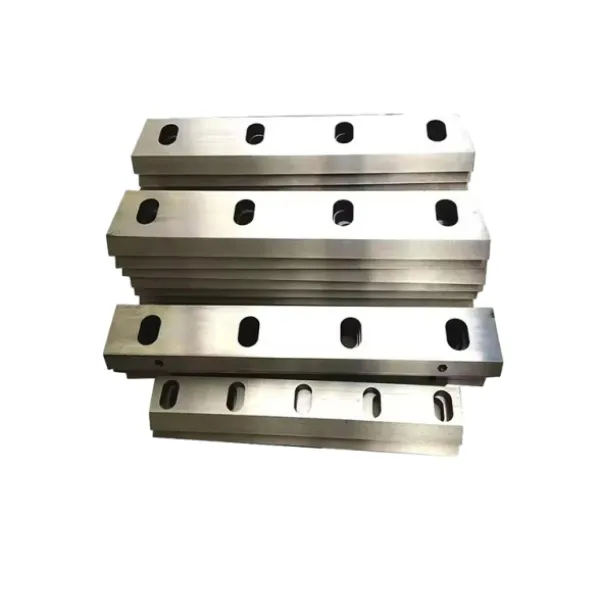
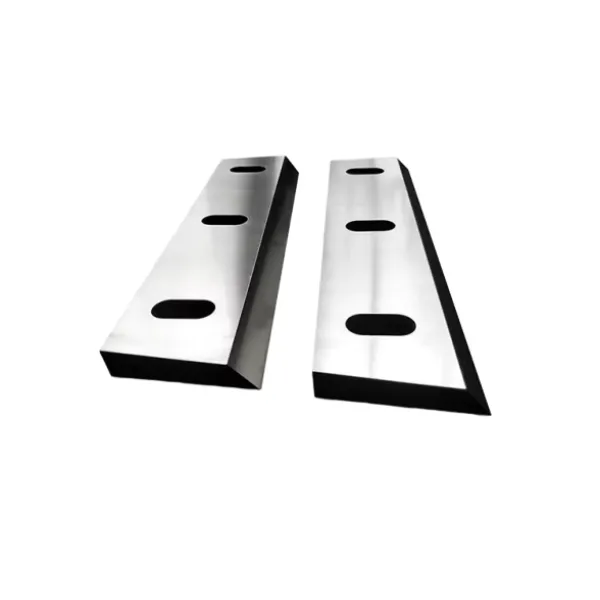
The Specific Application Of Plastic Crusher Blades:
1.Disposal of waste plastic products: crushing large plastic products such as automotive parts and home appliance casings into small particles for subsequent cleaning, screening, and reprocessing, achieving resource recycling.
2.Treatment of large volume plastic containers: For large volume materials such as plastic drums and industrial packaging containers, shredding is used to reduce volume, improve recycling efficiency, and reduce environmental pollution.
3.Diversified plastic processing: Suitable for various plastic materials such as polyethylene, polypropylene, polyvinyl chloride, etc., it can process different forms of waste such as plastic pipes, films, cans, etc.
4.Disposal of waste plastic film: Crushing waste plastic film in farmland can prevent soil pollution, and the broken fragments are easy to recycle and reuse, promoting sustainable agricultural development.
5.Industrial plastic waste treatment: For waste plastic pallets, rubber heads, plastic bottles, etc. generated in the chemical and manufacturing industries, they are broken and converted into raw materials that can be reprocessed to reduce production costs.
6.Building materials and packaging industry: Crushed plastic particles are used to produce plastic sheets, packaging materials, etc., promoting the lightweighting of building materials and the recycling of packaging materials.
7.Household waste sorting: Assist the waste treatment plant in crushing plastic products in mixed waste, improving sorting efficiency and reducing landfill volume.
Classification And Characteristics Of Blade Shapes For Plastic Crushers
1.Main types:
|
Blade Type
|
Structural Characteristics
|
Application Scenarios
|
Advantage
|
|
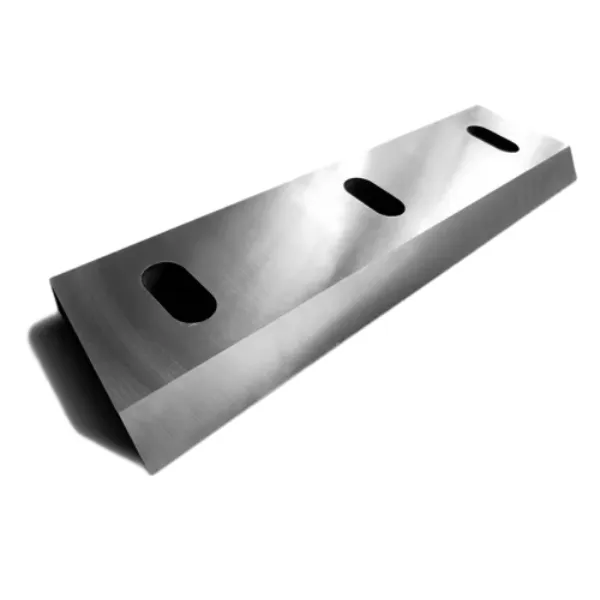
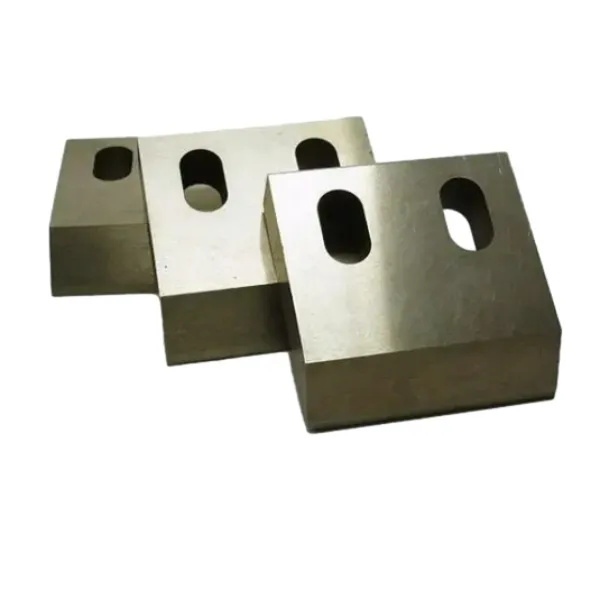
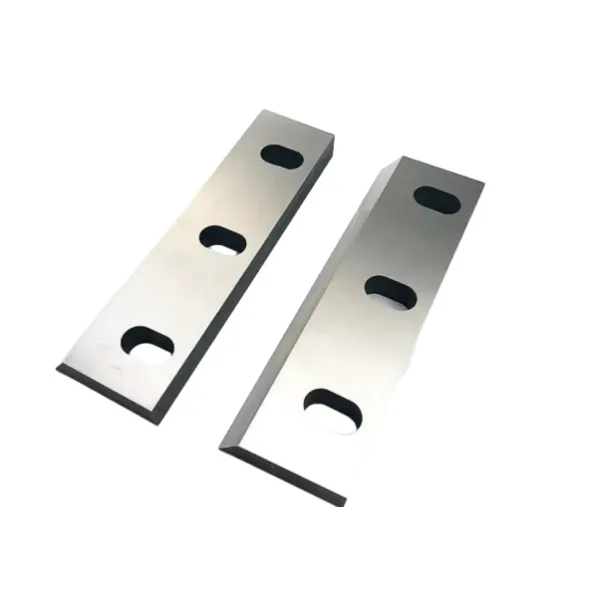
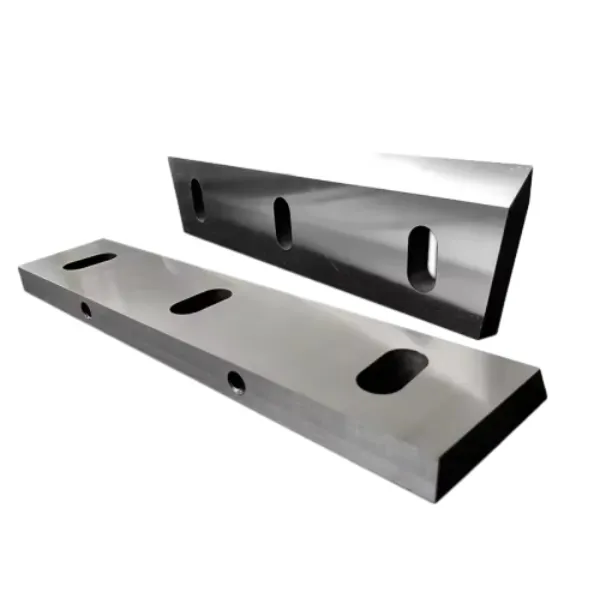
Flat blade
|
The blade is flat, rectangular or square in shape, with a smooth cutting surface and no complex serrated structure.
|
Suitable for thin-walled, hollow plastic products (such as plastic bottles, woven bags, plastic buckets), as well as hard plastic blocks with regular shapes.
|
High cutting efficiency, simple structure, suitable for rapid crushing of thin and large volume materials.
|
|
Serrated blade
|
The cutting edge is serrated, and the tooth shape includes triangles, trapezoids, etc. The tooth spacing and angle can be adjusted according to the material.
|
Suitable for tough or fiber based plastics (such as plastic film, woven bags), increasing friction and improving material gripping ability through tooth profile.
|
Significant crushing effect on high elasticity or slippery animal materials, reducing material slippage.
|
|
Hook blade
|
The blade is curved in a hook shape, and the blade design is similar to a hook.
|
Specially designed for irregular plastic waste (such as irregular plastic parts, pipes), to prevent materials from rotating or accumulating in the crushing chamber.
|
By using a hook shaped structure to forcibly pull materials, the crushing stability is enhanced.
|
|
Bending blade (claw blade)
|
The blade is bent as a whole or partially, forming a specific cutting angle.
|
Suitable for hard plastics (such as plastic sticks, shoe lasts) or tough materials, increasing shear force by bending the blade.
|
Complex angle design enhances penetration through hard materials and reduces blade wear.
|
|
Blade type blade
|
The blade is thin and has a relatively thin overall thickness.
|
For soft thin plastic sheets (such as plastic films and sheets), after cutting, the particles are uniform and the dust is minimal.
|
Suitable for refined crushing needs, reducing energy consumption and noise.
|
2.Shape Selection Suggestions
|
Thin walled/hollow materials (such as preforms, plastic buckets)
|
Prioritize the use of flat blade or blade type blades
|
|
Resilient/fibrous materials (such as films, woven bags)
|
Recommended serrated or hooked blade
|
|
Hard irregular materials (such as engineering plastic waste)
|
Choose curved blade or claw blade
|
|
Refined crushing demand
|
Blade type blade is superior
|
By adapting to different blade shapes, crushing efficiency can be significantly improved and blade lifespan can be extended.
Mainstream Materials And Characteristics
|
material
|
characteristic
|
Applicable scenarios
|
|
High speed steel (HSS)
|
Made of materials such as W6Mo5Cr4V2, with a hardness of HRC55-58 and strong impact resistance, it is suitable for processing ordinary plastic sheets such as ABS, PE, PP, etc. Its wear resistance is 30% higher than that of ordinary steel
|
Intermittent operation of small and medium-sized crushers for processing plastic waste with a diameter of ≤ 20cm
|
|
alloy tool steel
|
Cr12MoV, 9CrSi and other materials have a hardness of HRC58-62, balancing wear resistance and toughness, and are suitable for crushing high-strength mixed materials (such as plastics containing metal impurities)
|
Typical design: staggered blade structure to reduce the risk of material blockage
|
|
Hard alloy
|
Tungsten carbide matrix (YG8-YG15 series), with a lifespan of more than 5 times that of high-speed steel, suitable for high load continuous operation (such as industrial grade plastic recycling production lines)
|
Hard plastics (ABS, PC): prioritize alloy tool steel (Cr12MoV) or hard alloy blades to reduce the risk of blade breakage
|
|
Soft plastics (PE, PP): High speed steel blades (65Mn spring steel) can meet the demand and have lower costs
|
|
Wet environment: Choose stainless steel blades (316L material) to avoid rust and corrosion
|
Blade Design Optimization
Multi blade staggered arrangement: improves cutting efficiency and reduces equipment load (such as 12 jaw shredder blades).
Adjustment of blade spacing: It is recommended to control it within 0.1-0.3mm to adapt to materials of different thicknesses (which needs to be adjusted in conjunction with the sieve frame).
Maintenance And Replacement Operations
1.Key points of daily maintenance
Cleaning: Use a high-pressure air gun to clean the plastic residue on the surface of the blade every shift to prevent adhesion and affect cutting accuracy.
Lubrication: Lubricate the bearings and gears every 20 hours to reduce wear (lithium based grease is recommended).
2.Blade replacement process
Power off operation: Before dismantling, ensure that the equipment is completely powered off and clean the residual materials in the crushing chamber.
Installation specifications: The fixed blade edge faces inward, and the movable blade needs to adjust the spacing by rotating the balance wheel (to ensure no collision).
After tightening the screws, a second inspection is required to prevent loosening and blade detachment.
3.Reference for lifespan
High speed steel blade: continuous operation for about 150-300 hours.
Hard alloy blade: The lifespan can reach 800-1200 hours (avoid mixing metal impurities).
4.Selection of homework intensity:
Ordinary plastic: high-speed steel blades;
High load mixture: Cr12MoV alloy steel;
Industrial grade recycling: Hard alloy blades.
Plastic crusher blades need to be selected based on comprehensive material characteristics (wear resistance, impact resistance), plastic type (hardness, humidity), and operating strength