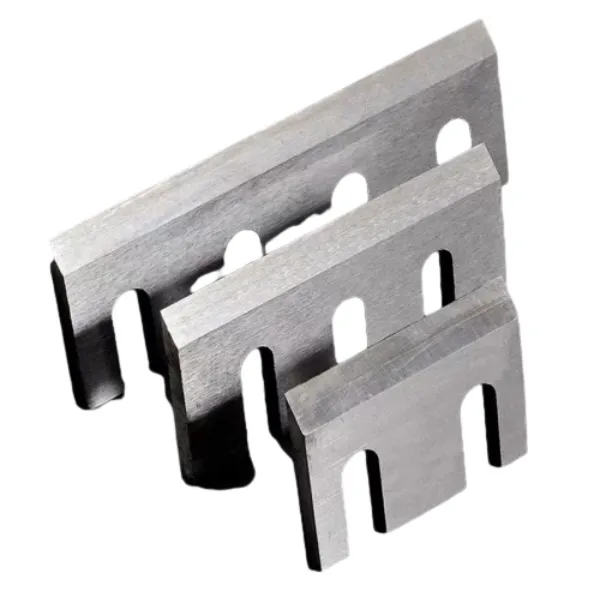
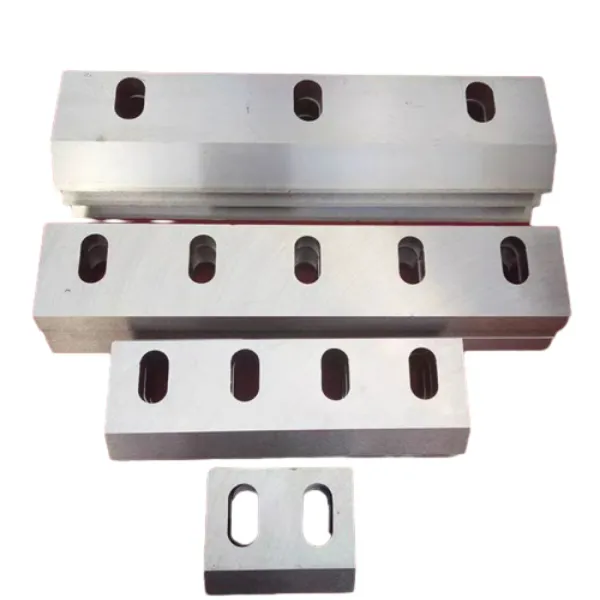
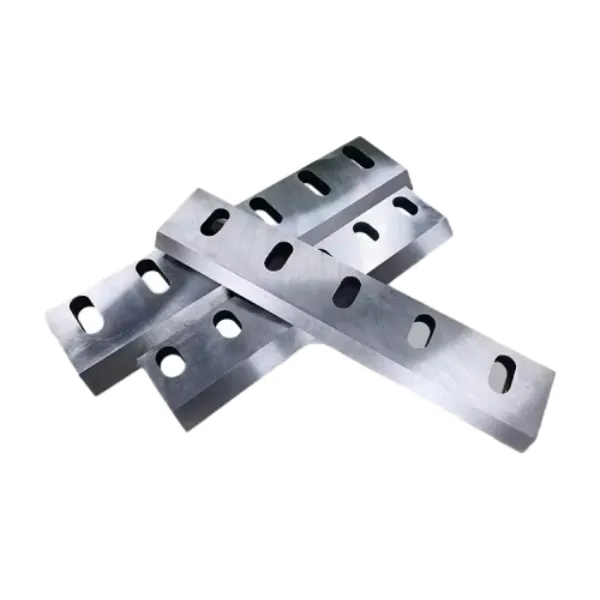
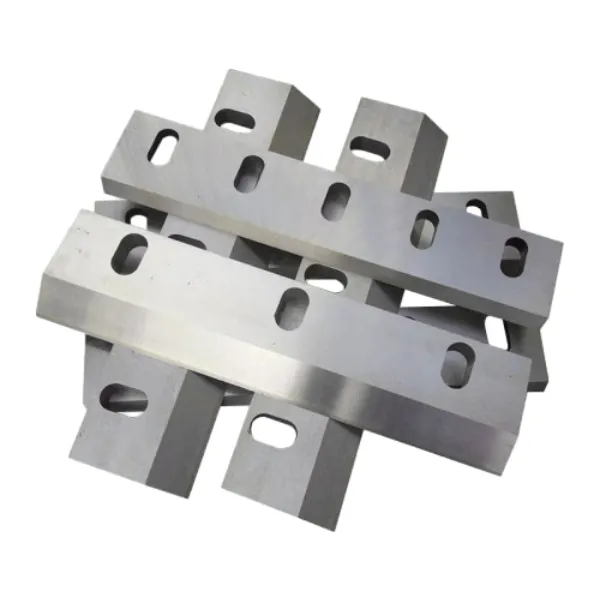
Application Of Solid Waste Recycling Crusher Blades
1.Recycling and treatment of waste tires: The blade decomposes the tires into 8-40 mesh rubber powder through multi-stage crushing and steel wire separation processes, which is used for the production of recycled rubber, modified asphalt aggregates, or the laying of sports field buffer layers. Hard alloy welding blades can cut through the steel wire curtain layer, and with the help of magnetic separation devices, achieve over 90% metal recovery. The separated steel wire can be directly used for arc furnace smelting.
2.Cutting of mixed solid waste materials: For rubber plastic metal composite waste, segmented blade blades are used: the front thin blade cuts into the rubber layer, and the rear thick blade cuts through the metal/plastic, achieving efficient separation of multiple components. The micro serrated texture cutting edge reduces the cutting resistance of viscous materials and improves the separation efficiency between rubber and metal.
3.Fine crushing of plastic waste: All steel blades (HRC52-55) are used to process engineering plastics such as ABS and PE, meeting the requirements of impact resistance and wear resistance. The crushed particles can be used for the production of recycled products such as rubber flooring and sound insulation materials.
4.Tire crushing production line: Modular units capable of processing 2-20 tons per hour, equipped with pulse dust removal system, with dust emission concentration below 20mg/m ³, in compliance with EU environmental standards.
5.Resource utilization of mixed waste: dynamically adjust the blade feed angle and speed to meet the continuous processing needs of rubber metal composite materials and improve resource recovery rate.
6.Production of environmentally friendly building materials: Crushed rubber particles are used as asphalt modifiers or building fillers to enhance material flexibility and sound insulation performance.
Material Of Solid Waste Recycling Crushing Blade
|
Type
|
Characteristic
|
Representative Model
|
|
High Strength Alloy Steel
|
Combining high hardness (HRC52-55) and toughness, it can withstand the impact and wear during solid waste crushing, and is suitable for handling conventional materials such as rubber, plastic, and wood.
|
Cr12MoV, SKD-11, etc., surface titanium nitride (TiN) coating can reduce rubber adhesion and extend service life.
|
|
Hard Alloy
|
With a hardness of HRA90 or higher, it is specifically designed for cutting metal composite waste (such as tire steel cord) to reduce the risk of blade cracking. Used in fields that require high-strength cutting, such as tire crushing and cutting of mixed solid waste (rubber+metal).
|
Using tungsten carbide (YG8) as the core material
|
|
High Speed Steel
|
High hardness (HRC60-65) and high temperature resistance, suitable for processing engineering plastics (such as ABS, PE) or high-strength fiber materials, but with weaker wear resistance than hard alloys.
|
HSS
|
|
Stainless Steel
|
Strong wear resistance, suitable for working in dry environments such as hard plastic bottles and wood, but prone to rusting and should be avoided in humid conditions.
|
3Cr13
|
|
Impact Resistant Alloy
|
By optimizing the alloy ratio to enhance fatigue resistance, it is suitable for high-intensity continuous operations such as large tires or construction waste.
|
Representative models: H13K, LD, etc
|
Solid Waste Recycling Crushing Blade Shape
|
Shape Type
|
Characteristic
|
Application Scenarios
|
|
Straight Blade
|
The blade is straight and sharp, with a simple structure, suitable for rapid cutting of soft solid waste such as conventional plastics and rubber.
|
Crushing of low hardness materials such as plastic bottles, rubber products, and paper.
|
|
Bending Blade
|
The blade is designed in an arc or curved shape, optimizing the cutting angle to improve the tearing efficiency of hard materials and reduce impact loads.
|
Crushing of high-strength or tough materials such as tire steel wire cords, engineering plastics, etc.
|
|
Serrated Blade
|
The blade has fine serrations that break down fibrous or elastic materials through a "bite tear" action, reducing cutting resistance.
|
Fine processing of fibers or high elastic materials such as wood, waste textiles, rubber tires, etc.
|
|
Rectangular Blade
|
Wide and thick body, combined with a fixed knife to form a shearing zone, achieves rapid crushing of hard and brittle materials (such as plastic barrels) through collision and shearing.
|
Primary crushing of hard solid waste such as large volume plastic products and household appliance casings.
|
|
Circular Blade
|
Circular distributed cutting edge, capable of impacting the surface of materials through high-speed rotation, suitable for grinding and crushing metal or regularly shaped materials.
|
Crushing and recycling of regular hard objects such as metal waste and electronic components
|
|
Multi Blade Combination
|
The mixed layout of straight knives, curved knives, and serrated knives, combined with multiple effects such as impact, shearing, and tearing, improves the sorting efficiency of complex mixed solid waste.
|
Collaborative treatment of multi-component solid waste such as rubber metal composite materials and electronic waste.
|
Selection Suggestions
|
Conventional Soft Materials (Plastic/Rubber)
|
Choose straight or rectangular blades to balance cutting efficiency and cost.
|
|
High Strength or Fiber Materials (Tires/Wood)
|
Using serrated or curved blades to reduce energy consumption and tool wear through tearing effects.
|
|
Mixed Complex Waste (Metal+non-metal)
|
Combining multi shaped blades (such as straight blades and serrated blades) to achieve multi-stage crushing and component separation.
|
Summary: The shape design of solid waste recycling and crushing blades directly affects the crushing efficiency and material adaptability - straight blades are suitable for fast cutting of soft materials, curved blades and serrated blades are suitable for high-strength or fibrous waste, and multi blade combinations are suitable for the grading treatment of complex mixed solid waste.
Blade Structure Design
1.Modular and detachable design: adopting a quick replacement structure with a base, top seat, and screw matching, only replacing the worn blade body instead of the overall blade, significantly reducing maintenance costs and shortening downtime.
2.Segmented blade and micro serrated texture: The thin blade at the front of the segmented blade quickly cuts into the material, and the thick blade at the back enhances the cutting strength, suitable for efficient separation of mixed solid waste (such as rubber+metal). Add micro serrated texture to the edge of the blade to reduce the cutting resistance of adhesive materials such as rubber through tearing effect.
3.Multi layer blade collaborative layout: Multiple layers of blades are arranged in a staggered manner inside the crusher, and the crushing efficiency is improved through the combined effects of impact, shearing, and grinding, especially suitable for large tires or plastic waste.
Summary: The selection of blades for solid waste recycling crushers should be based on the type of waste, mixing complexity, and operational intensity. Material optimization (high carbon steel/hard alloy) and structural innovation (modular/segmented cutting edge) should be used to improve processing efficiency while reducing maintenance costs.