Main Applications
1.Household waste disposal: Crushing large household waste (such as furniture, tires, plastic buckets) and mixed waste containing metals, plastics, and other components for subsequent classification, recycling, or incineration to generate electricity.
2.Handle hazardous waste (such as industrial waste containing metals) to reduce the risk of environmental pollution caused by landfilling or incineration.
3.Industrial waste treatment: Decompose waste materials from industrial production (such as metal scraps and chemical containers) to achieve resource reuse and reduce the accumulation of industrial waste.
4.Waste metal recycling: Efficiently process metal materials such as scrap steel, car shells, and steel bars, crush them to improve smelting efficiency, and reduce transportation and smelting costs. Cooperate with magnetic separation technology to separate metal and non-metal impurities (such as rubber and plastic) and improve the purity of recovered metals.
5.Plastic and rubber recycling: shred waste plastic products (such as bottles, films) and tires into pellets for recycling or fuel production, reducing white pollution.
6.Wood and paper processing: Crushing waste wood, cardboard, etc., converting them into wood pellet fuel or papermaking raw materials, supporting a circular economy.
7.Metal processing support: Processing lightweight metal sheets (such as car shells and home appliance shells) to provide uniform raw material fragments for metal reprocessing.
8.Crush large containers in the chemical industry, such as plastic drums and reaction vessels, for easy cleaning and reprocessing.
9.Resource utilization of agricultural waste: Tear up organic waste such as straw and rice straw, convert them into feed, fertilizer, or biomass fuel, and improve the utilization rate of agricultural resources.
10.Large volume material handling: For engineering waste (such as steel structural beams, ship scrap) or hollow containers (such as oil drums, plastic tanks), multi axis blades are used to collaboratively tear and reduce material volume.
11.Mixed waste sorting: Processing composite waste containing metals (such as circuit boards and electronic waste), achieving efficient separation of metals and non metals through crushing.
ApplicationScenarios And Adaptation
|
Vehicle Accessories
|
Tires, wheel hubs, engine casing (compatible with Cr12MoV blades)
|
|
Metal Products
|
Scrap steel, aluminum profiles, cans (recommended hard alloy or multi claw blades)
|
|
Plastic And Garbage
|
Plastic pipes, household waste, industrial sludge (suitable for 9CrSi or curved blade design)
|
|
Medical Waste
|
Corrosion resistant materials (such as tungsten steel) and sealing design are required
|
|
Hazardous Waste
|
Suggest using hammer shaped blades made of high manganese steel material, which have strong impact resistance
|
Comparison Of Material Performance
|
Material
|
Advantages
|
Disadvantage
|
Applicable Scenarios
|
|
9CrSi
|
High economic efficiency, easy processing, and good toughness
|
Wear resistance is average
|
Soft materials such as rubber, fiber, and paper
|
|
Cr12MoV
|
Strong wear and impact resistance, with a hardness of HRC 58-62
|
Corrosion resistance is average
|
Wood, high hardness plastic, scrap metal
|
|
hard metal
|
High wear resistance, high temperature resistance, and high smoothness
|
High brittleness and high processing cost
|
Precision cutting of stainless steel, high carbon steel, and other materials
|
|
tungsten steel
|
Strong corrosion resistance and long service life
|
Impact prone to breakage, expensive price
|
Acidic and alkaline corrosive waste
|
Core Classification And Design
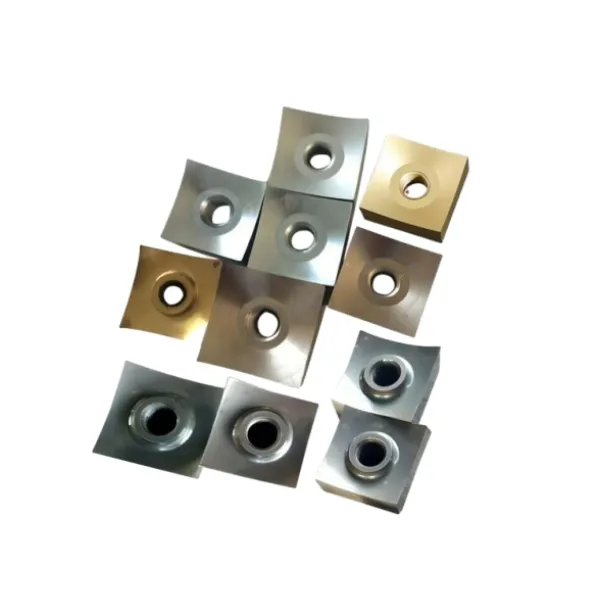
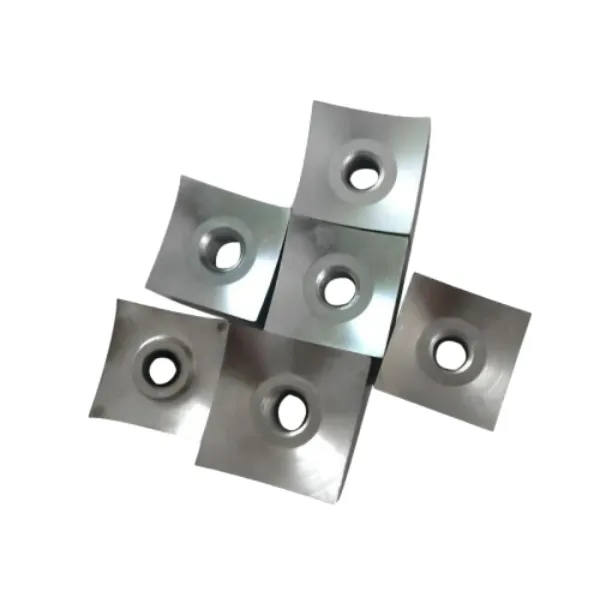
1.Single axis blade
The shape is square, with curved edges on all four sides and a tapping hole in the middle, which needs to be used in conjunction with the fixed knife on the tool holder.
Design features: The blade edge to the center hole is concave, enhancing shear stability and suitable for hard materials such as metal and waste plastic.
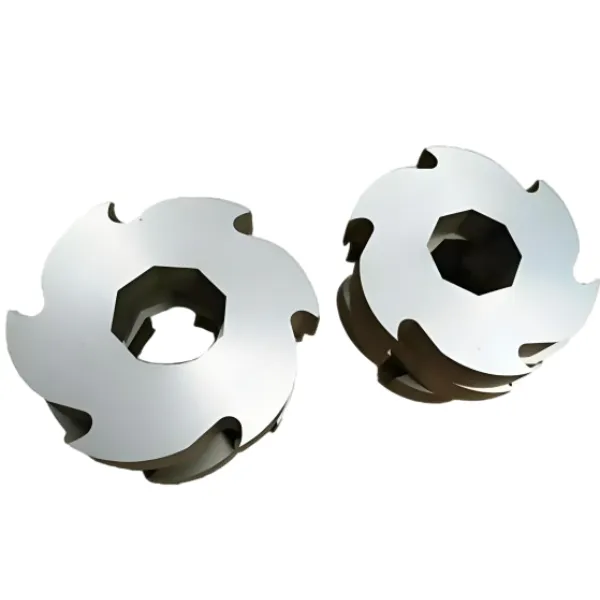
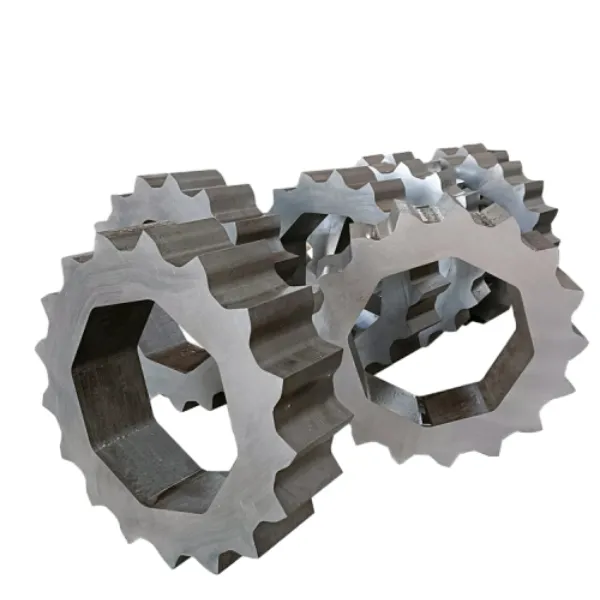
2.Multi axis blade (dual axis/four axis)
Adopting claw knife design, common types include 3 claws, 8 claws, 12 claws, etc., reducing material size through crushing, tearing, and squeezing.
Applicable scenarios: scrap steel, wood, large volume waste (such as plastic drums, tires), and mixed waste (composite materials containing metals).
Selection And Maintenance Points
1.Selection suggestions
9CrSi alloy tool steel is preferred for soft materials, while Cr12MoV or hard alloys are preferred for hard materials.
For large volume waste materials such as tires, it is recommended to use a 12 jaw multi axis blade to enhance the biting force.
2.Maintain standards
Wear repair: If the blade wear is ≥ 0.1mm, it needs to be ground. Hard alloy blades can be ground 3-5 times.
Rust prevention treatment: Carbon steel blades are regularly coated with rust prevention oil, and the coating material is preferred for humid environments.
Collaborative matching: The blade thickness needs to be adapted to the power of the shredder (such as thick walled scrap steel requiring ≥ 2mm blades).
Summary: The material and design of shredder blades need to be selected based on the material characteristics (hardness, corrosiveness, volume). Cr12MoV is suitable for high impact scenarios with hard alloys, while 9CrSi focuses on economical soft material treatment. Regular maintenance can extend the service life by more than 30%.