Industry Application Fields
1.Construction engineering: used for cutting steel pipes for building structures (such as scaffolding and support columns), requiring blades to adapt to batch cutting and high-intensity operations. Dense toothed blades can reduce burrs and improve construction efficiency.
2.Mechanical manufacturing: When processing precision components such as hydraulic cylinder barrels and transmission shafts, high-precision blades (such as SKD11 material) should be selected to ensure that the perpendicularity of the cut is ≤ 0.1 mm, meeting the requirements for subsequent welding or machining.
3.Energy and Chemical Industry: When cutting thick walled steel pipes such as oil and gas pipelines and reactor supports, it is necessary to use serrated blades with low-speed and large feed parameters (line speed 15-30 m/min) to improve chip removal efficiency and extend blade life by 35.
Material Classification
Hard Alloy | Strong wear resistance, suitable for cutting high hardness steel pipes, with a long service life. | Especially suitable for cutting stainless steel pipes |
High Speed Steel (Including Tungsten Molybdenum/Cobalt) | Supports high-speed cutting (≥ 3000r/min) with excellent heat dissipation performance | Especially suitable for cutting stainless steel pipes |
Alloy Tool Steel (Such as Cr12mov, 9crsi) | By vacuum heat treatment, the hardness (HRC 58-62) is improved, while also considering wear resistance and toughness. | Suitable for batch cutting scenarios of carbon steel pipes |
High Manganese Steel | Balance between toughness and wear resistance, | Suitable for rough cutting scenarios with high impact loads |
Composite Coated Blade | Surface titanium plating or nitriding treatment to reduce friction coefficient and improve cutting efficiency | Suitable for processing thin-walled steel pipes (≤ 2mm). |
Typical blade shape and structural design
Straight Knife | Long blade design suitable for straight cutting, reducing pipe deformation |
Bending Knife | The curved blade enhances the biting ability of complex pipe shapes and prevents blade slippage |
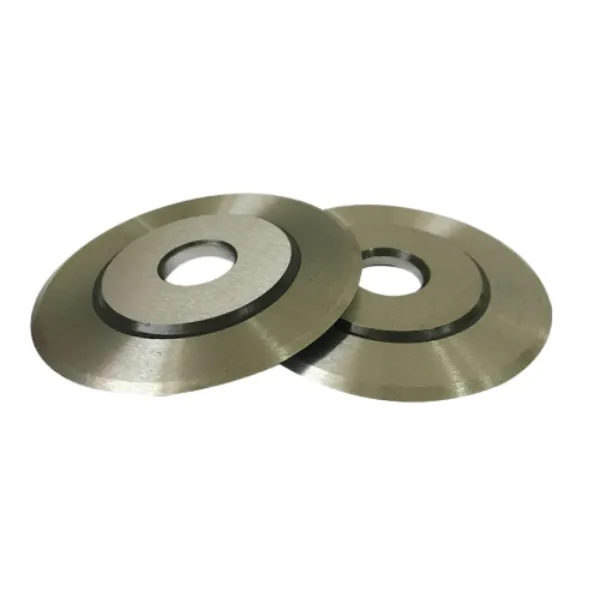
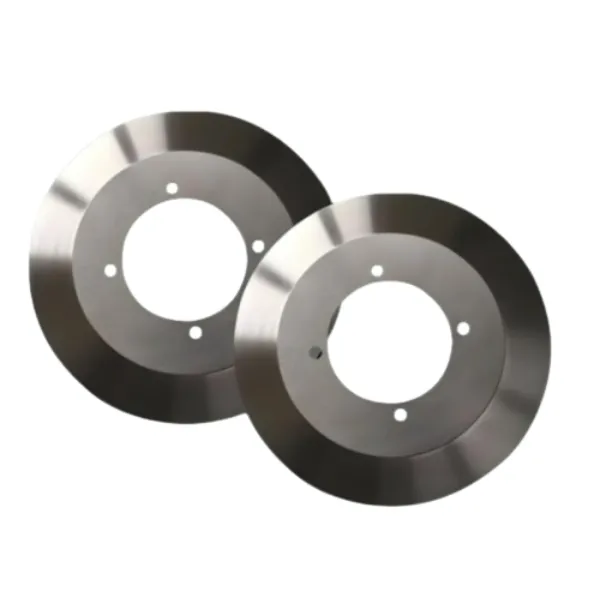
Circular Blade/Saw Blade (Outer Diameter ≥ 250mm) | Rotary cutting is suitable for automatic pipe cutting machines, with high efficiency and smooth cutting edges, and is compatible with automatic pipe cutting machines |
Wavy Cutting Edge | Disperse cutting stress and reduce the risk of blade breakage through serrated blade design | Suitable for cutting thick walled steel pipes (≥ 5mm). |
Precision Grinding Plane | The surface accuracy of the blade is ≤ 0.003mm, ensuring a smooth and burr free cut | Suitable for cutting pipes for precision instruments |
Chip Breaker Design | Triangular or arc-shaped chip breaking grooves can effectively discharge chips and avoid entanglement with blades | Suitable for high-speed continuous cutting conditions |
Key Performance Parameters
Tolerance | Ultra thin blades (0.05-0.5mm) require a tolerance control of ≤ 0.002mm, and it is recommended to use mirror treated blades for high-precision cutting scenarios. |
Adapt to Pipe Diameter | Universal blades cover cutting of steel pipes with a diameter of 3-50mm, while special specifications (such as those with a diameter of over 100mm) require customized shaped blades. |
Cutting Speed | Hard alloy blades support high-speed cutting at ≥ 3000r/min, while carbon steel blades are recommended to use ≤ 1500r/min to extend their lifespan. |
Selection Suggestions
Demand Scenario | Recommended materials and shapes | Adaptation advantages |
High Precision Stainless Steel Pipe Cutting | Hard alloy disc cutter | Wear resistant and high temperature resistant, with smooth and clean incisions |
High Speed Slitting of Carbon Steel Pipes | High speed steel straight/curved knife | Fast heat dissipation, suitable for dynamic cutting |
Thick Walled Steel Pipe Rough Cutting | High manganese steel or Cr12MoV alloy steel bending knife | Strong impact resistance, reducing the risk of blade breakage |
Notes | The thickness of the blade needs to be adjusted according to the wall thickness of the pipe (0.5-1.5mm is recommended for thin-walled pipes, and ≥ 2mm for thick walled pipes). |
Maintenance And Replacement
Regular Grinding | Blade edge wear ≥ 0.1mm requires re grinding, while hard alloy blades can be ground 3-5 times |
Rust Proof | Carbon steel blades need to be coated with anti rust oil after use, and stainless steel or coated blades are preferred for humid environments |