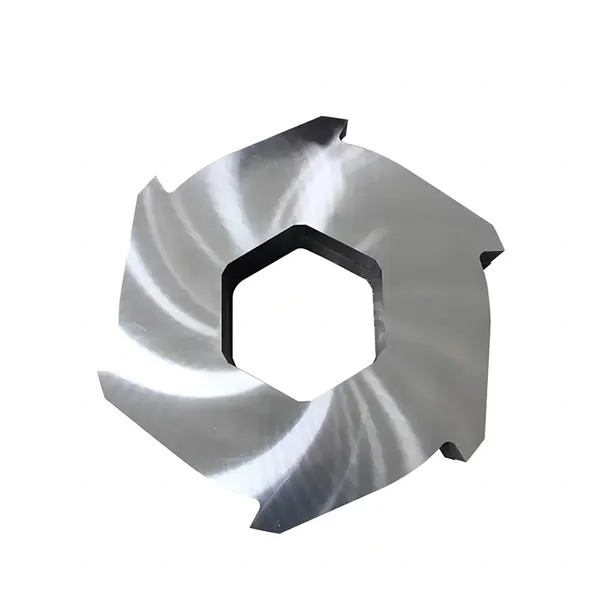
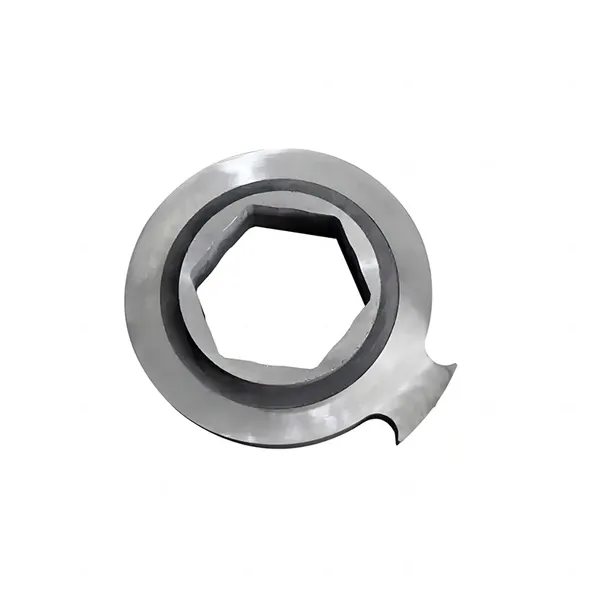
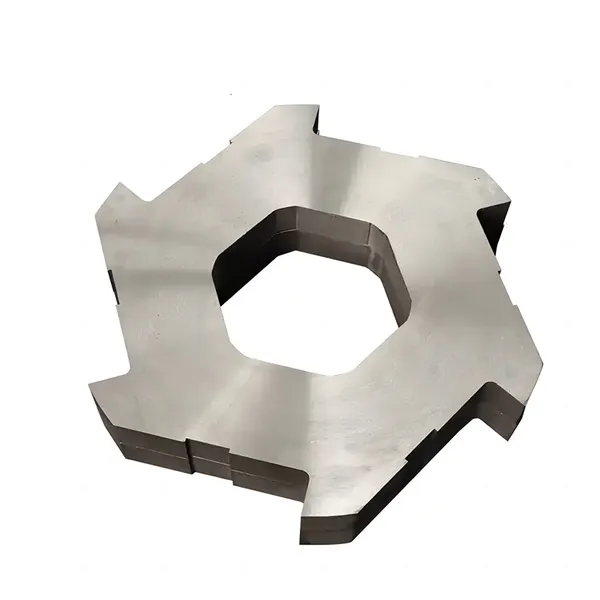
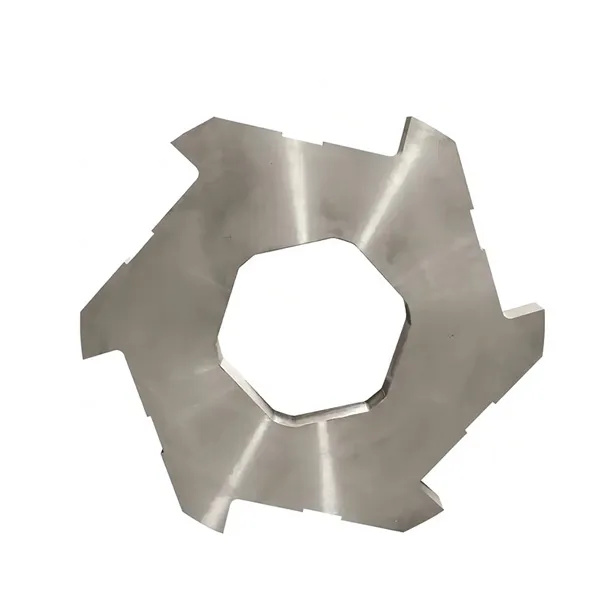
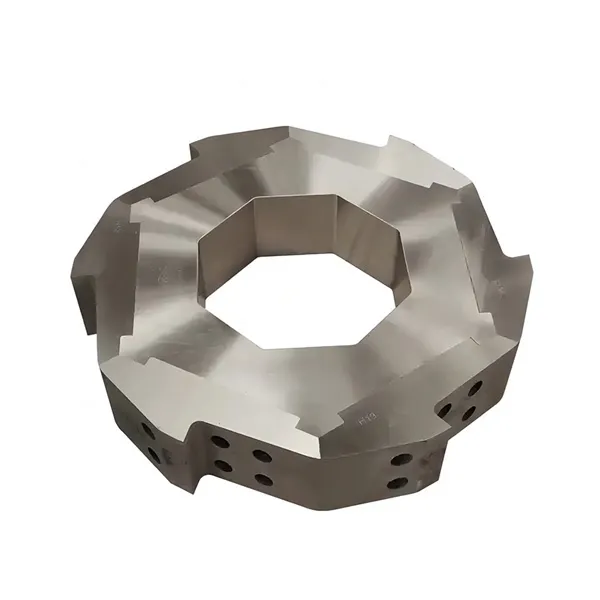
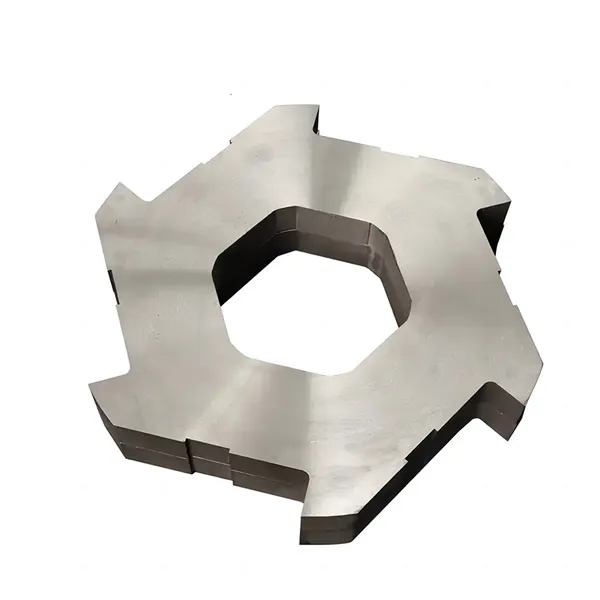
Application Fields Of Scrap Steel Crusher Blades
|
Field
|
Typical Scenarios and Compatible Devices
|
Key Role
|
|
Metal Recovery
|
Scrap steel processing center, metal sorting line
|
Improve metal purity and recovery rate
|
|
Automobile Disassembly
|
Scrap car processing plant
|
Efficient separation of metallic and non-metallic materials
|
|
Construction Waste Treatment
|
Demolition sites and solid waste treatment stations
|
Resource utilization of steel bars and steel structures
|
By adapting to different scenario requirements, scrap steel crusher blades form a complete resource recycling chain in fields such as metal recycling, industrial manufacturing, and environmental protection.
1.Scrap metal recycling: Processing metal waste such as scrap steel, scrap iron, scrap aluminum, etc., crushing them into 10-50mm fragments, improving transportation efficiency and pre-treatment effect before melting. Used for metal recycling enterprises to separate metal and non-metal impurities (such as plastics and rubber) through crushing, improving the purity of raw materials.
2.Preparation of raw materials for steel smelting: After crushing, uniform fragments can be directly put into electric arc furnaces or converters for smelting, shortening smelting time and reducing energy consumption, helping steel enterprises reduce production costs.
3.Automotive dismantling and parts recycling: Crushing steel components such as car shells, frames, and wheels, efficiently extracting metal materials, and supporting resource recycling in the automotive dismantling industry. Handle complex metal components such as engines and transmissions to reduce manual disassembly costs.
4.Recycling waste construction machinery (such as steel beams and plates) and scrap steel generated from ship dismantling, crushing them and using them as recycled metal raw materials.
5.Construction waste disposal: The steel bars, iron pipes, steel structures, etc. generated by the demolition of broken buildings promote the resource utilization of construction waste. Processing steel reinforcement waste in concrete to achieve efficient separation of metal and construction waste.
6.Used in landfills or urban solid waste treatment centers to break down the metal components in mixed waste and reduce environmental pollution risks.
7.Recycling of household appliances and electronic waste: Crushing the metal shells and internal parts of household appliances such as refrigerators, air conditioners, and washing machines to extract recyclable metals such as copper and iron. Support the electronic waste dismantling industry to achieve efficient recycling of metal resources.
8.Industrial waste recycling: Processing metal scraps, stamping waste, etc. generated during the factory production process to reduce the accumulation of industrial waste. Cooperate with sorting technology to recover high-value metals (such as copper and aluminum) and improve economic efficiency.
|
index
|
Typical parameters/description
|
Applicable scenarios
|
|
Blade hardness
|
HRC 58-65
|
Crushing of high carbon steel and alloy steel
|
|
Crushing thickness
|
10-50 mm
|
Automotive steel plate and steel bar waste
|
|
Linear velocity
|
15-50 m/min
|
Continuous high-intensity homework
|
|
Grinding cycle
|
200-300 hours per assignment
|
Extended service life
|
Core Materials And Performance
|
high manganese steel
|
Strong impact resistance, capable of withstanding high-intensity crushing operations, suitable for processing mixed metal materials such as waste cars and household appliances
|
|
Alloy tool steel (such as Cr12MoV)
|
After vacuum heat treatment, the hardness reaches HRC 58-62, with both wear resistance and toughness, suitable for batch processing of thick walled steel
|
|
High strength alloy steel
|
Containing elements such as tungsten and cobalt, it enhances the fatigue resistance and wear resistance of the blade, and is suitable for metal shredding under high-speed rotating conditions
|
Shape Classification Of Scrap Steel Crusher Blades
1.Basic Blade Shape Classification
|
Blade Type
|
Shape Features
|
Applicable Scenarios
|
|
Straight Edged Blade
|
The blade is straight, with a simple structure and a sharp edge
|
Mainly used for processing thinner metal sheets in scrap steel (such as car shells, lightweight scrap iron), or waste mixed with other soft materials (such as plastics, rubber)
|
|
Curved Blade
|
The blade is curved in an arc shape, and its penetration through hard objects is enhanced through curved cutting
|
Suitable for crushing thick heavy metals (such as steel bars, construction machinery scrap steel) or complex shaped scrap iron containing oil and rust
|
|
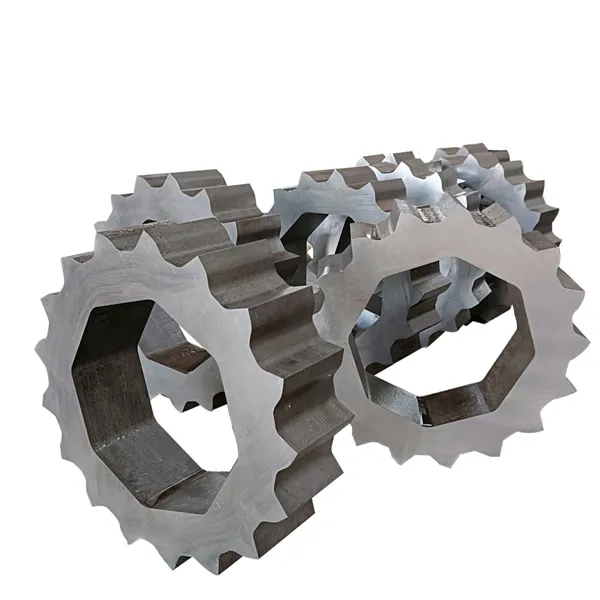
Serrated Blade
|
The blade has a serrated structure that decomposes materials through tearing
|
For large or high toughness scrap steel (such as scrap tire rims, industrial gears), it can effectively avoid material jamming
|
2.Combination Blade Design
|
Blade Type
|
Shape Features
|
Applicable Scenarios
|
|
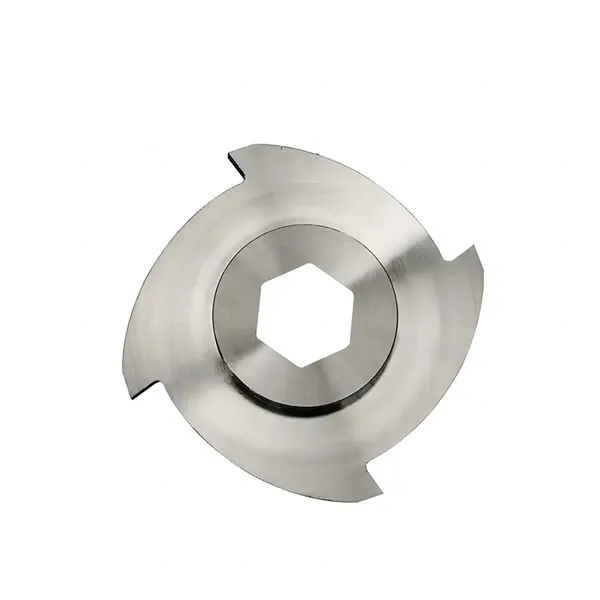
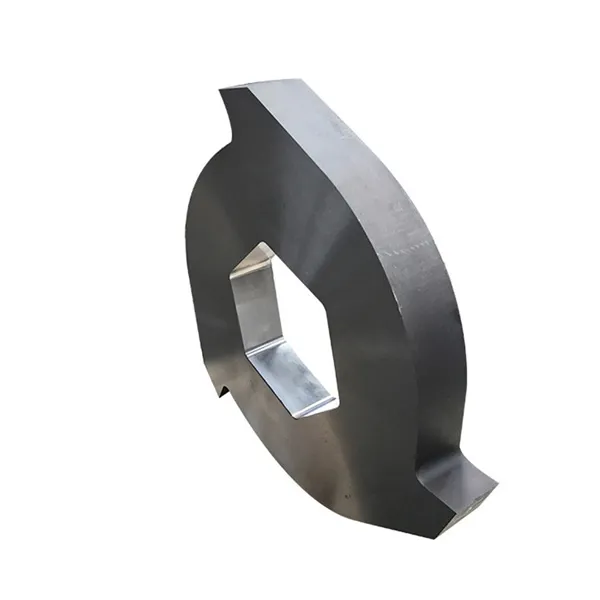
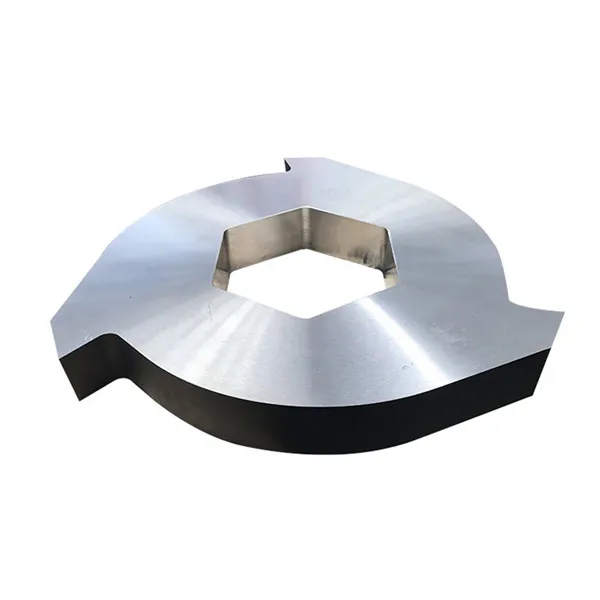
Claw Shaped Blade
|
The blade has a multi claw structure (such as 3 claws, 8 claws, 12 claws), which achieves compression and shearing through multi axis coordinated rotation
|
Processing large volume scrap steel (such as steel structural beams and heavy equipment waste), resulting in more uniform material size after crushing
|
|
Composite Blade Combination
|
Combining straight, curved, or toothed blades to form a multi angle cutting system
|
Suitable for mixed waste materials (such as metal and plastic composite waste), improving sorting efficiency and crushing adaptability
|
|
Serrated Blade
|
The blade has a serrated structure that decomposes materials through tearing
|
For large or high toughness scrap steel (such as scrap tire rims, industrial gears), it can effectively avoid material jamming
|
3、Blade Classification Based on Device Adaptability
|
Blade Type
|
Equipment Adaptability
|
Typical Application Scenarios
|
|
Single Axis Blade
|
Square blade, used in conjunction with a fixed blade
|
Small and medium-sized scrap steel processing (such as metal casings for household appliances)
|
|
Multi Axis Blade
|
Claw shaped blade set, dual axis/four axis layout
|
Large scale scrap steel crushing (such as car frames, construction machinery waste parts)
|
4.Collaborative Optimization of Material and Shape
|
Blade Type
|
Equipment Adaptability
|
|
Carbide Inserts
|
Serrated or curved blade design enhances wear resistance to high hardness scrap steel (such as alloy steel)
|
|
Coating Reinforced Blade
|
Titanium nitride coated straight blade reduces metal friction loss and extends continuous operation life
|
By combining and optimizing blades of different shapes, the scrap steel crusher can adapt to the full scene processing needs from lightweight metals to heavy-duty scrap steel.
Application Scenarios And Maintenance Points
|
Dismantling of Used Cars
|
The blade needs to have impact resistance to prevent the metal frame from breaking
|
|
Industrial Solid Waste Treatment
|
Mixed metals (such as steel bars and aluminum alloys) need to be compatible with high resistance sharpening blades to reduce frequent replacement
|
|
Sorting of Decoration Waste
|
For impurities such as concrete fragments and ceramic tiles, the blade needs to balance hardness and corrosion resistance
|
Technical Requirements For Metal Shredder Blades
1.Material properties
High resistance running in steel material: The blade should be made of high-strength alloy steel with a carbon content of 0.65-0.95% and a chromium content of 12-14% (such as Cr12MoV, LD, etc.) to balance wear resistance and impact resistance. For high hardness metal materials such as stainless steel and alloy steel, it is recommended to use high-speed steel or special wear-resistant alloy materials to ensure that the blade is not easily broken under high loads.
Heat treatment process requirements: The blade needs to undergo vacuum quenching+cryogenic treatment process to ensure hardness uniformity (HRC55-65) and internal stress release. The surface needs to be treated with nitriding or coating (such as TiN coating) to further enhance its wear resistance.
2.Structural Design
Blade shape and arrangement
Straight blade: suitable for cutting metal sheets, ensuring that the straightness error of the cutting edge is ≤ 0.02mm.
Sawtooth blade: Used for tearing fibrous metal or composite materials, the tooth profile needs to be precisely ground to reduce shear resistance.
Dual axis blade arrangement: Adopting a reverse rotating blade axis design, efficient cutting is achieved through interlocking blades, and the blade clearance needs to be dynamically adjusted according to the material thickness (usually 0.1-0.5mm).
The combination of disc and blade
The cutterhead needs to be forged with high-strength steel as a whole to ensure the stability of blade installation and avoid blade displacement caused by vibration during high-speed operation. Wear resistant gaskets need to be installed between the blade and the disc to prevent metal debris from entering the gap and causing wear.
3.Manufacturing and process standards
Processing accuracy
The roughness of the blade edge should be ≤ Ra0.4 μ m, and the angle tolerance of the blade edge should be controlled within ± 0.5 °.
Blade thickness tolerance ± 0.05mm, flatness error ≤ 0.02mm/100mm.
Welding and assembly process
The blade and handle are welded using laser welding or argon arc welding, and the weld seam needs to be inspected by ultrasonic testing to ensure no cracks or pores.
After installation, the blade needs to undergo a dynamic balance test with a speed deviation of ≤ 2%.
4.Usage and maintenance requirements
Dynamic adjustment and monitoring
Equipped with a CNC gap adjustment system, the blade gap is adjusted in real-time according to the hardness of the material (accuracy ± 0.1mm).
Integrated wear monitoring sensor, automatic alarm when blade thickness wear exceeds 10%.
5.Maintenance optimization:
Regularly check the wear of the blade edge. If the wear is ≥ 0.1mm, it needs to be ground or replaced. Hard alloy blades can be repeatedly ground 3-5 times.
Clean up residual metal debris to avoid impurities accumulating and affecting cutting efficiency. It is recommended to shut down for maintenance every 8 hours.
When working in a humid environment, it is preferable to choose coated blades or apply rust proof oil to prevent rusting.
6.Selection Misconceptions and Suggestions
Material balance: To avoid blindly pursuing high hardness, it is necessary to combine toughness selection (such as Cr12MoV alloy steel) to prevent brittle fracture of the blade.
Design adaptation: Match the blade shape according to the material type (such as metal thickness, impurity content), for example, hook shaped or plate hammer shaped blades are preferred for thick walled steel.
Whole machine collaboration: The performance of the blade needs to be matched with the power system and feeding speed of the crusher to avoid overloading and shortening the blade life.
Summary: High manganese steel or alloy tool steel should be selected for scrap steel crusher blades based on material characteristics, combined with tooth and hook designs to improve efficiency, and equipment stability should be ensured through regular maintenance and scientific selection.